Check input signal, mute/DSP routing, speaker wiring, gain position and connector lock.
Amplifier User Guide
How to Use a 1U Class D Digital Amplifier Correctly
This guide helps pro audio buyers, installers, rental teams and distributors use a 1U Class D digital power amplifier correctly before and after purchase. It covers speaker wiring, safe power-on sequence, impedance matching, DPB Series operation notes and common troubleshooting.
Wiring
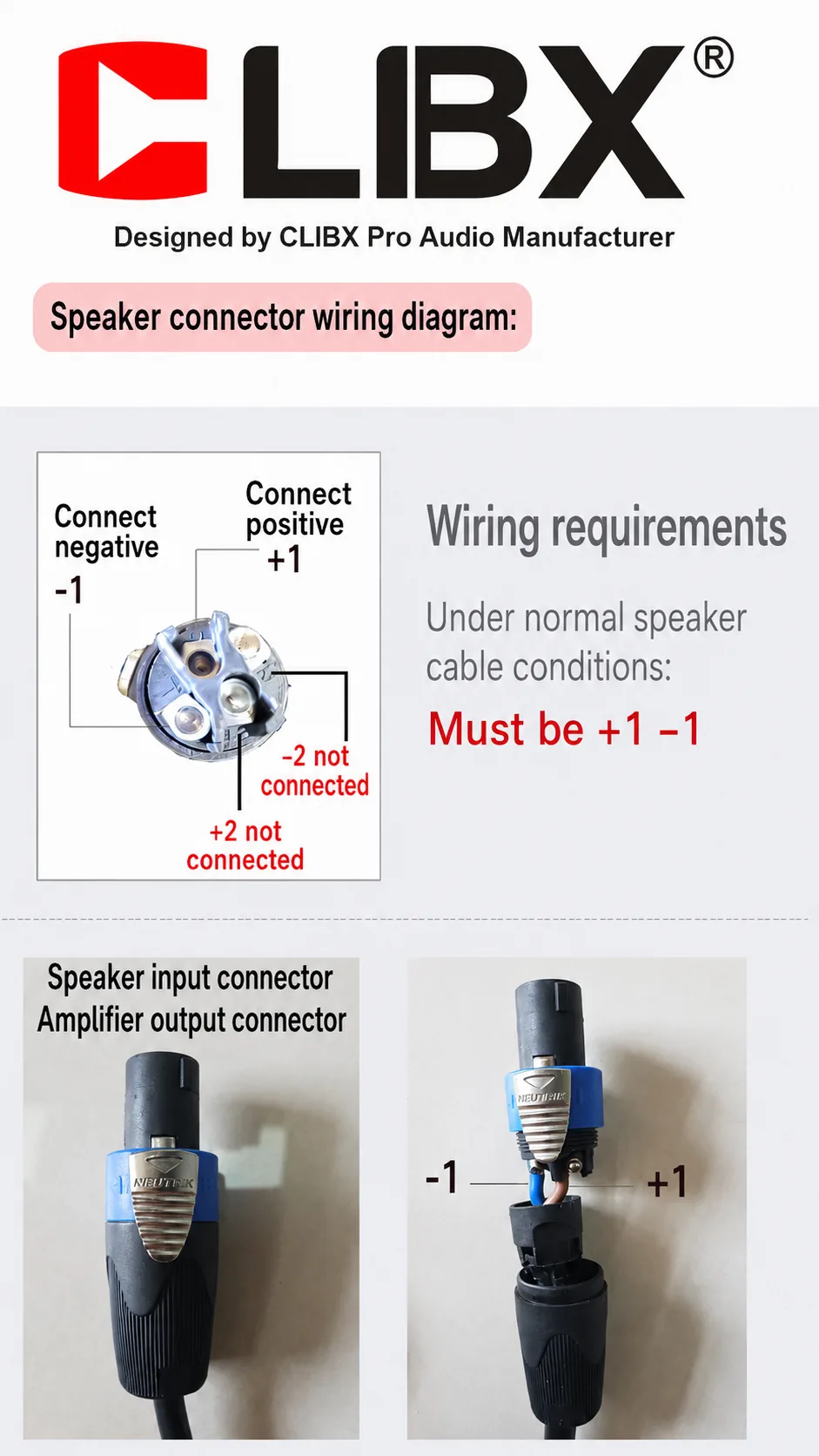
Speaker connector wiring: use +1 and -1
For normal speaker cable conditions, connect the loudspeaker positive wire to +1 and the negative wire to -1. Do not connect +2 or -2 unless your system design specifically requires another wiring mode.
- Connect positive speaker cable to +1.
- Connect negative speaker cable to -1.
- Leave +2 and -2 not connected for standard speaker cable use.
- Tighten the connector and check there are no loose copper strands.
Before power-on
Before powering on the amplifier
- Confirm the amplifier is connected to a grounded AC power source within the rated voltage range.
- Set the gain controls low before sending signal from the mixer or DSP.
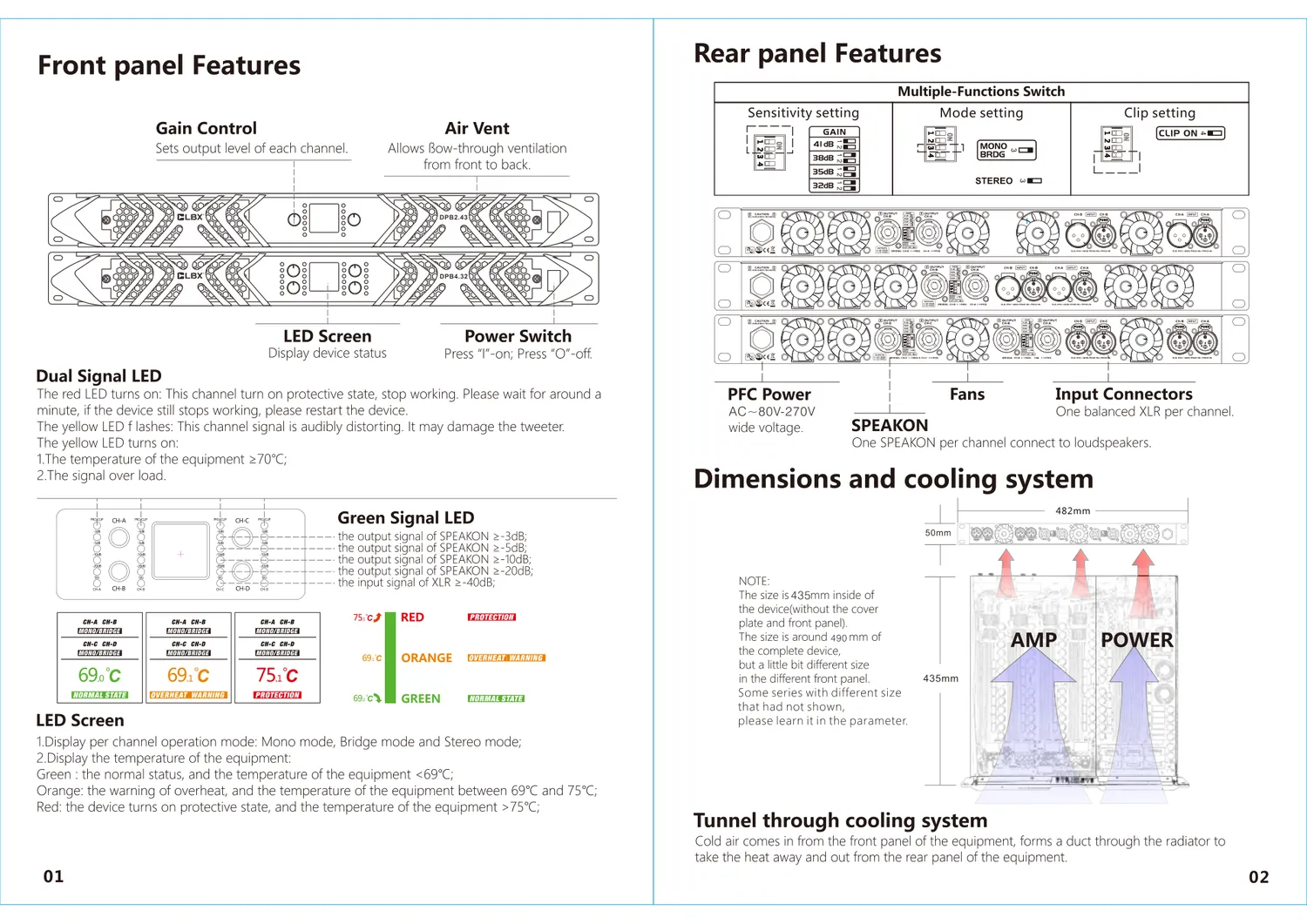
- Check the rear-panel operating mode: stereo, parallel or bridge.
- Confirm speaker impedance and cable size are suitable for the amplifier output power.
- Keep front and rear airflow clear so the cooling tunnel can move heat out of the rack.
- Power on the mixer, processor and signal source first; power on the amplifier last. When shutting down, turn the amplifier off first.
DPB Series
CLIBX DPB Series quick operation manual
The DPB Series is designed for professional sound reinforcement, touring PA and fixed installation. Key manual points include PFC wide-voltage operation, multiple rear-panel modes, high damping factor, efficient cooling and protection circuits.
- Power supply: PFC wide-voltage design, 80V-270V AC, 50/60Hz.
- Operating modes: stereo, parallel and bridge.
- Protection: soft start, DC, subsonic, high-frequency, overheat and short-circuit protection.
- Frequency response: 20Hz-20kHz.
- Damping factor: greater than 5000.
- Recommended use: live events, PA reinforcement, touring racks and fixed installations.
Technical data
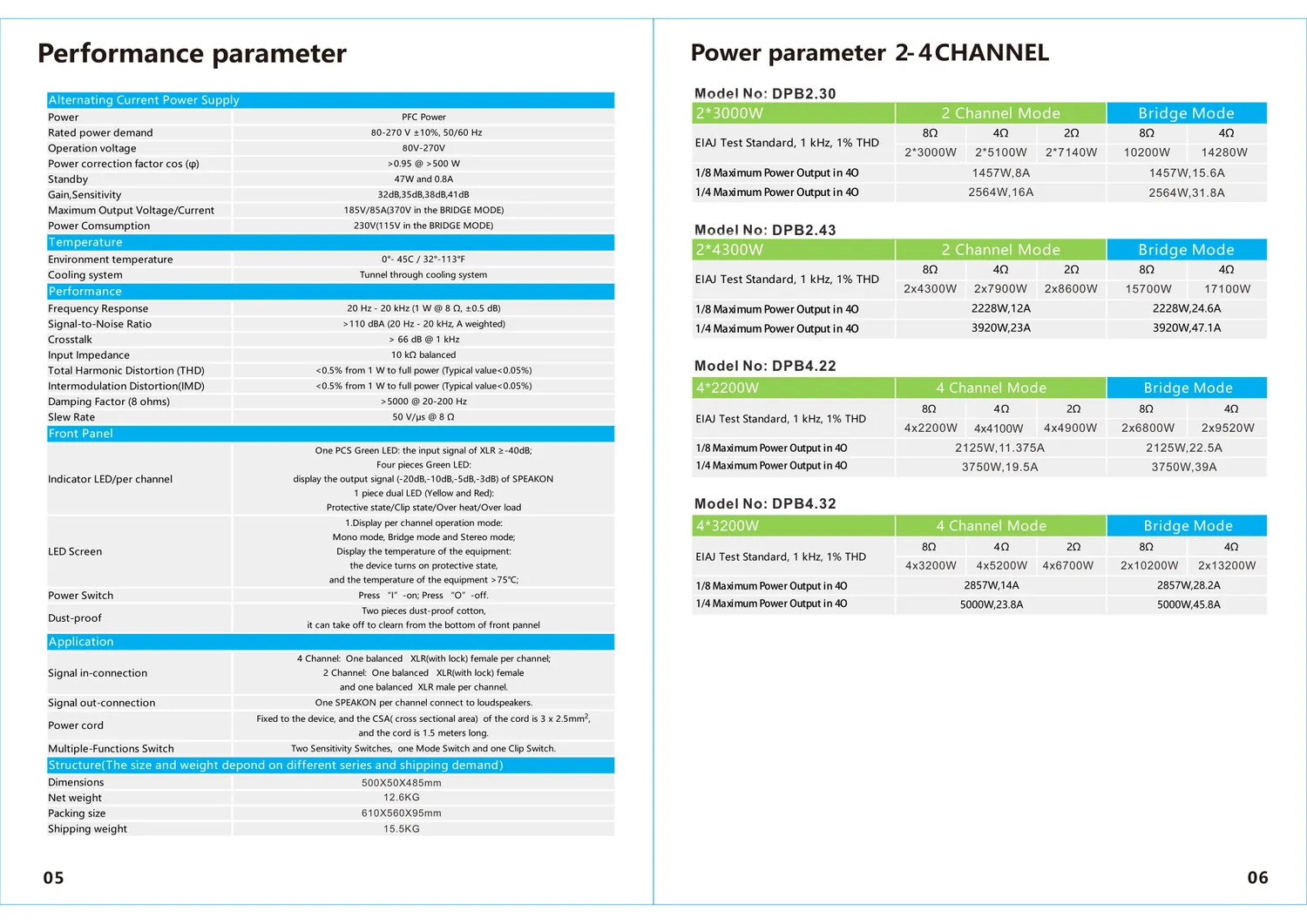
DPB Series output reference
| Model | 8 Ohm stereo | 4 Ohm stereo | 2 Ohm stereo | Bridge output |
|---|---|---|---|---|
| DPB2.30 | 3000W x 2 | 5100W x 2 | 7140W x 2 | 10200W / 14280W |
| DPB2.43 | 4300W x 2 | 7900W x 2 | 8600W x 2 | 15700W / 17100W |
| DPB4.22 | 2200W x 4 | 4100W x 4 | 4900W x 4 | 6800W x 2 / 9520W x 2 |
| DPB4.32 | 3200W x 4 | 5200W x 4 | 6700W x 4 | 10200W x 2 / 13200W x 2 |
Quick checks
Common problems and checks
Reduce load, check for short circuit, confirm speaker impedance and allow the amplifier to cool.
Clear airflow, clean dust, leave rack ventilation space and avoid blocking front/rear vents.
Lower mixer/DSP output, reduce amplifier gain or choose a higher-power model for the speaker system.
Check grounding, balanced input cables, signal processor output and cable routing near power lines.
FAQ
Which pins should I use on the speaker connector?
For normal speaker cable use, connect positive to +1 and negative to -1. Leave +2 and -2 not connected.
Can a Class D amplifier drive 2 Ohm speakers?
Only use 2 Ohm operation when the specific amplifier model supports it and the wiring, cooling and speaker load are correct.
Should I load the PDF manual on every page view?
No. A fast HTML manual page is better for buyers and search engines. The full PDF can be supplied when a customer requests it.
Need help matching an amplifier to your speakers?
Send your speaker model, impedance, quantity and application. CLIBX can recommend a suitable DPB or DS Series amplifier model.
Contact CLIBX